
For more than a decade, the mini hydropower system at Kudjip Nazarene Hospital in Jiwaka Province has supplied reliable, high-quality electricity needed to support critical healthcare services, demonstrating the important role mini hydropower can play in remote communities.
Kudjip's case is one of several case studies featured in a new report launched in Port Moresby.
The Review of the Off-Grid Mini Hydro Development in Papua New Guinea provides the first comprehensive, evidence-based analysis of the country’s off-grid mini hydropower sector. It identifies practical recommendations to improve the performance and long-term sustainability of existing systems while creating pathways for support future development.
Implemented by the United Kingdom’s Foreign, Commonwealth and Development Office and delivered through Australia’s Economic and Social Infrastructure Program (ESIP), the review aims to improve existing mini hydropower systems and expand the sector’s role in supplying renewable, reliable electricity to communities across PNG.
Executive Director of Nazarene Mission Service, Jordan Thompson highlighted the role community ownership and local capability have played in sustaining the mini hydro systems at Kudjip.
“Today, the hydropower system is operated by trained local staff from the surrounding community. Building local skills and expertise has been critical to keeping the system running and supporting healthcare services over the long term,” said Mr Thompson.
More than a decade on, Kudjip's case demonstrates that successful mini hydropower projects depend not only on strong infrastructure, but also on community ownership, participation and local capability.
Australian High Commission Acting Minister-Counsellor, Mr Ashley Brosnan, acknowledged the significance of the partnership with the UK Government in supporting renewable energy in PNG.
“This report presents a great opportunity for continuous development of mini hydropower as a viable source of reliable energy for remote communities around the country,” said Mr Brosnan.
Speaking at the launch, British Deputy High Commissioner Niall Cullens said community participation is critical to the long-term success of mini hydropower projects.
“Sustainable mini hydropower systems depend on strong community participation and an approach that reflects local needs. A technically sound project can still struggle if communities are not involved in planning and decision-making from the outset,” said Mr Cullens.
While mini hydropower has been part of Papua New Guinea's energy landscape since the 1960s, the sector has seen little recent growth. Despite proven technology and favourable conditions, including high rainfall, rugged terrain and extensive river systems, no new mini hydropower systems have been commissioned since 2017.
Drawing on lessons from Kudjip and other projects around the country, the review sets out 9 recommendations aimed at supporting the next generation of mini hydropower developments.
Through their ongoing partnership, Australia, the United Kingdom and Papua New Guinea are supporting practical energy solutions that help communities access reliable electricity and build a more sustainable future.
ENDS
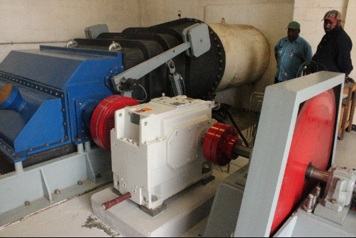
Power generation equipment inside the powerhouse at the Kudjip Nazarene Hospital mini hydropower system.
For further information, including access to related materials, please contact the Australian High Commission media team: +675 7090 0100