
Children affected by violence, abuse and trauma in West New Britain Province will have greater access to safe, appropriate support following new training for local health and social service workers.
Thirty-six health and social service workers — 20 women and 16 men — from provincial and rural health facilities, the West New Britain Provincial Health Authority and partner organisations across Talasea, Nakanai and Kandrian-Gloucester districts are now better equipped to recognise trauma, respond safely and connect vulnerable children with the care they need.
Violence, abuse, disasters and other traumatic events can have long-term effects on children’s health, development and wellbeing. The training gave participants practical skills to recognise and respond to trauma early, while helping children feel safe.
West New Britain Provincial Health Authority Chief Executive Officer Dr Joseph Nale said strengthening the skills of frontline workers was important.
“Children are among our most vulnerable citizens, and it is our collective responsibility to ensure they receive the care, protection, and support they need to heal and thrive. This training represents an important investment in building the capacity of our frontline workforce to respond effectively to child trauma,” he said.
Facilitator Sarah Kasa, from the Morobe Provincial Health Authority Family Support Centre and an Australia Awards alumna, highlighted the importance of the training in supporting health workers.
“Our goal is to ensure that children receive care and support that uphold their safety, dignity, and wellbeing. Building the capacity of frontline workers is critical to achieving this,” she said.
Participants also looked at how they could apply and share what they had learned in their workplaces and communities.
Elsie Kitiman, Area Health Extension Officer for Hoskins Local Level Government, said one of the most valuable lessons was learning how to create safe spaces for affected children to speak openly, and ensuring widespread understanding of the issues faced by children.
“Greater awareness in schools and communities can also help identify hidden cases and ensure children receive the support they need. When children grow up in safe and supportive environments, they are better able to reach their full potential and contribute positively to society,” she said.
The training was delivered through a partnership between the West New Britain Provincial Health Authority and the Morobe Provincial Health Authority Family Support Centre, and co-funded by Australia and the West New Britain Provincial Health Authority.
ENDS
BACKGROUND
The Australia–Papua New Guinea Law and Justice Partnership is a PNG law and justice sector-led initiative. Programs are identified through the National Coordinating Mechanism and delivered in partnership with sector agencies. Australia is proud to support practical, locally led efforts that improve coordination and outcomes across the law and justice sector.
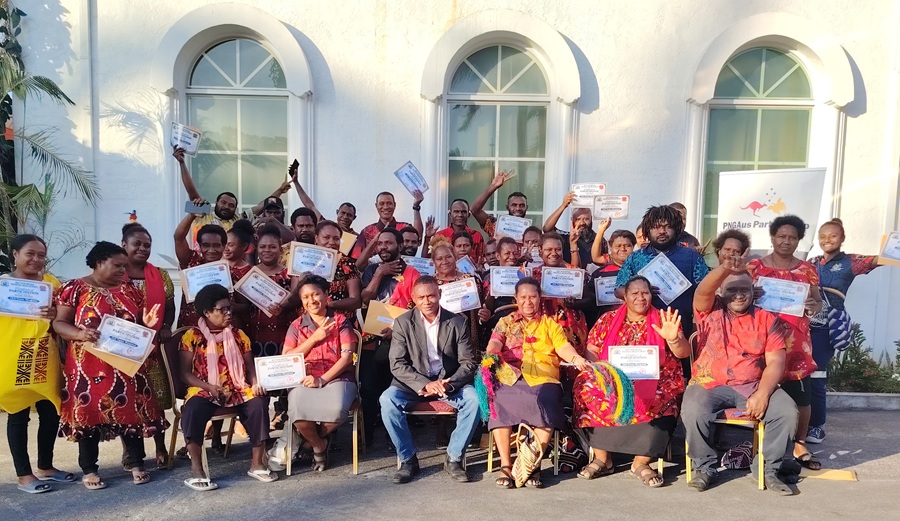
36 trainees received certificates to mark the course completion.
For further information, including access to related materials, please contact the Australian High Commission media team: +675 7090 0100